 Collecting, Copying, Trading: Ancient Indian Manuscripts in India, Britain and Germany in the Nineteenth Century
Indra Sengupta
i.sengupta@ghil.ac.uk
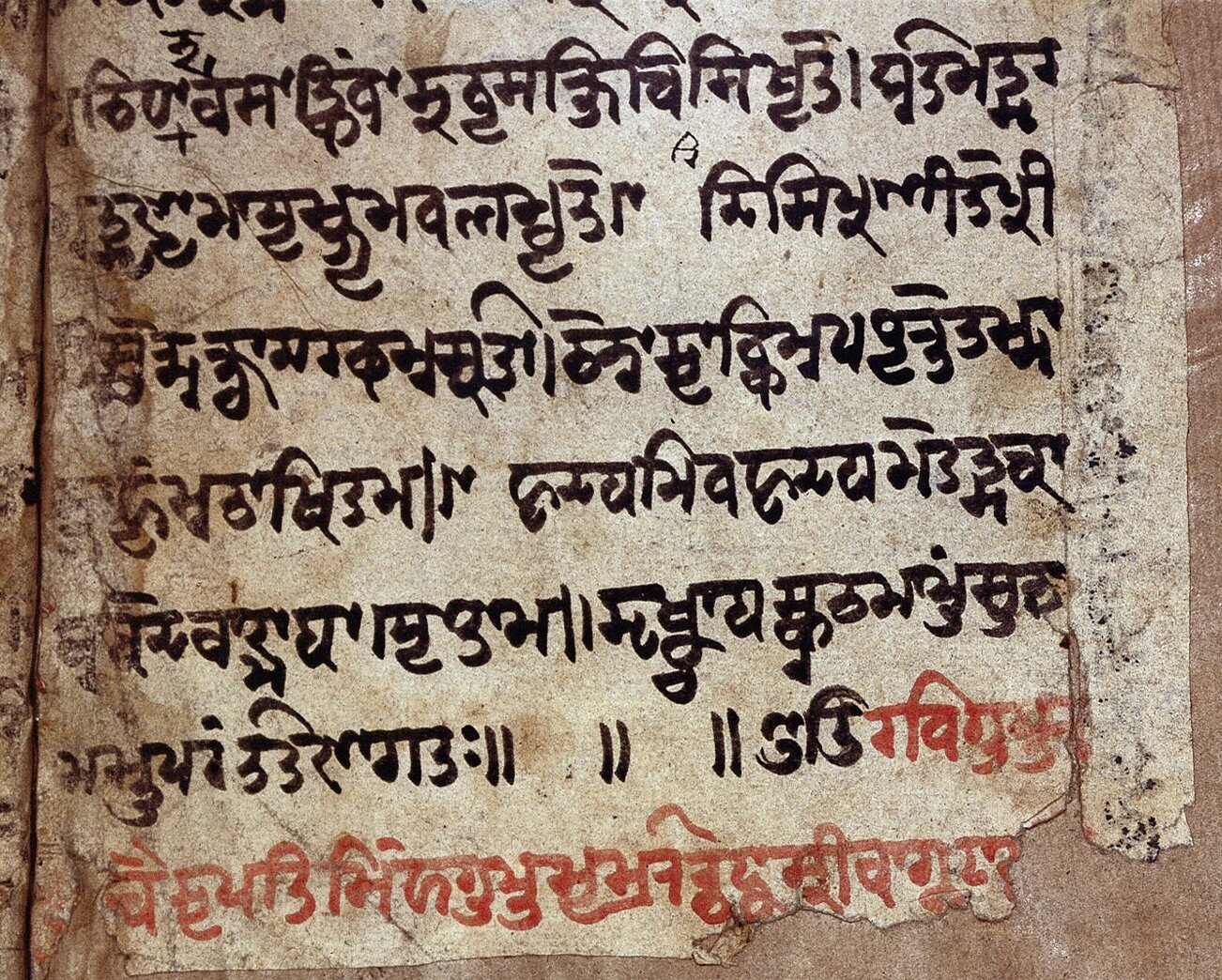
My new project speaks to some of the key questions surrounding colonial knowledge as a field of inquiry. It examines the practices surrounding collecting, copying and the trade in old Indian (primarily Sanskrit) manuscripts by European scholars and their Indian interlocutors in the nineteenth century.
The past four decades have seen much research on ‘Orientalist’ knowledge production, both in the context of colonial empires (such as the British in India) as well as in national contexts that were often linked to European colonies outside Europe (such as Germany). This project will expand the scope of existing research on the field by looking at the material history of Indian manuscripts to understand the economic and social underpinnings of knowledge projects undertaken by European (in this case German and British) scholars of India working both within and without the colonial state. The study examines how the increasingly lucrative trade in manuscripts functioned; what processes and practices were involved in the search for manuscripts, which were often very hard to come by, in colonial India; it looks at the relationship between interlocutors and collaborators that orientalist scholars and colonial officials used. It also examines how the value of manuscripts was determined, the role of individual collectors, libraries and auction houses in Europe and the centres of acquisition, copying and auction/trade of these manuscripts. By focusing on the material world of manuscripts, by studying them as objects of intellectual value as well as commodities, and by expanding the geographic frame of analysis from colonial India to include Europe, the project will broaden our understanding of the world of orientalist knowledge-making and of colonial knowledge projects.
The project focuses on a case study, that of the manuscript collection of Sir Robert Chambers. This was a collection of some 726 volumes consisting of ancient Sanskrit manuscripts, including the complete Rigveda and all or portions of the remaining Vedas. It was assembled between 1774 and 1799 by Sir Robert Chambers, Chief Justice of the East India Company’s territories in Bengal and a “Company orientalist”, for 20,000 to 25,000 pounds sterling. In 1843, some 40 years after it was first put up for sale, the Königliche Bibliothek of Berlin bought the collection at a public auction at Sotheby’s in London in a move that was to prove to be significant for German Indological scholarship.
The journey of the Chambers collection from the villages of colonial Bengal to state libraries in Berlin via auction houses in London is a testament to the trans-European process of manuscript collecting and the world of orientalist knowledge production. Yet, the story of its origin throws light on how colonial state power, even in these very early days of Company rule in India, enabled access to indigenous knowledge, which was committed to writing in the old historical-religious texts of Brahmanical Hinduism. The study provides insights into how Company officials located the manuscripts and their dependence on local pundits and indigenous copyists in the process.