 Project title
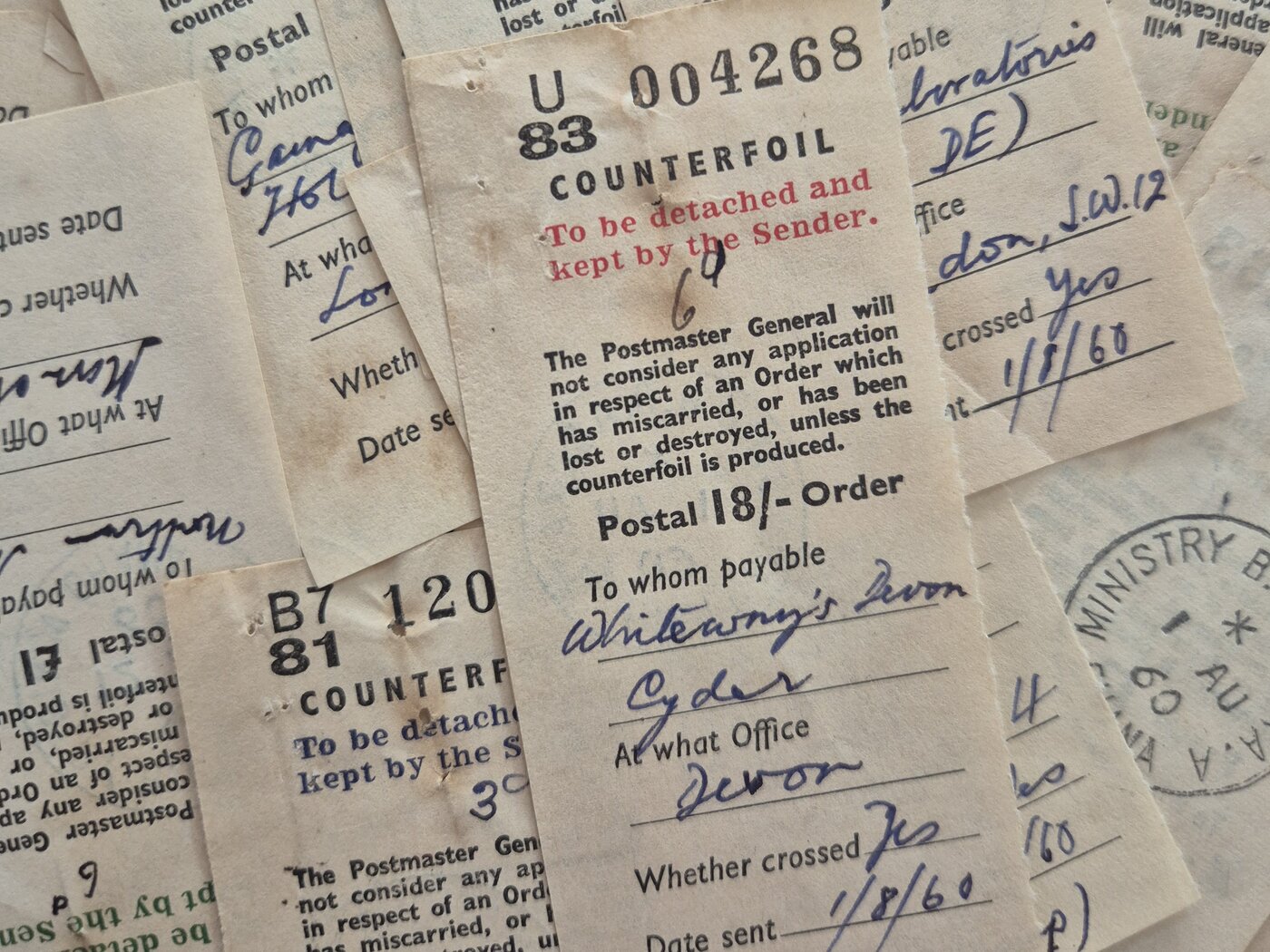
Who could move money across distances and borders? The project investigates small-scale money transfers through postal networks in the British Empire and post-independence West Africa from the 1890s to the 1990s, examining how postal and money order systems shaped differentiated possibilities of economic agency and continuously affected—and were affected by—gendered spheres of money mobility.
Migration and (im-)mobilities have long served to connect peoples, places, and economies across political boundaries and geographical borders. These transregional relationships forged depend(-ed) not only on the movements of people, commodities, and knowledge but equally on the movements of monies. Yet, despite technological advances and innovations over the course of the second half of the twentieth and twenty-first centuries, the global money transfer landscape remains characterized by high fragmentation and transaction costs as well as uneven accessibility.
This project explores the historically changing conditions of ‚money mobility‘ across (post-)imperial spaces, focusing on the infrastructures, practices, and regulatory frameworks that both enabled and constrained the movement of monies. Rather than approaching money mobility primarily through banks, commercial enterprises, and large-scale capital flows, the project centers on small-scale monetary transfers through postal networks. Introduced by the British Royal Mail with the establishment of the Money Order Office, postal and money order systems offered a standardized, more affordable, and supposedly secure alternative to sending cash by mail. As postal networks expanded over the course of the twentieth century, postal and money order systems connected individuals, communities, and territories across trans- and (post-)imperial spaces.
By conceptualizing postal and money order systems as critical financial infrastructures, the project unfolds along three interconnected analytical dimensions. First, it reconstructs the establishment, expansion, administration, and regulation of postal and money order systems in Western Africa from the late nineteenth until the late twentieth century. Second, by approaching these financial infrastructures as socio-technical arrangements, the project explores how postal and money order systems intersected with gender relations, asking how access to and control over monetary mobility were socially differentiated and structured. Finally, by examining users’ interactions with postal and money order systems, the project asks how individuals navigated infrastructural constraints and breakdowns and claimed agency within or against official regulatory frameworks.
By mapping out how localized financial transactions and gendered practices of ‘doing money’ were (re-)produced by, sustained, and contested trans- and (post-)imperial spaces, the project aims to bridge infrastructure history, financial history, and the history of gender. In doing so, the project seeks to contribute to frameworks for broadening the understanding of the economic history of empires and their aftermath.