 Dr Emily Steinhauer
Emily Steinhauer is an intellectual historian of modern Europe and its transatlantic entanglements. She has worked on histories of intellectual exile, homelessness and return, focusing on the Frankfurt School between America and West Germany. At the German Historical Institute, she reconsiders the ‘woman question’ of intellectual history, the ways historians can think about intellectual labour and how gender influences our conception of intellectuals and ‘their’ ideas. Focusing on women social researchers from the late 19th to the mid-20th century, she considers how their intellectual identities and careers were forged between political activism, academic research and expertise.
Research Project
The ‘Woman-Question’ of Intellectual History
Women's Intellectual Habitus and Intellectual Labour in Social Research in the Twentieth Century
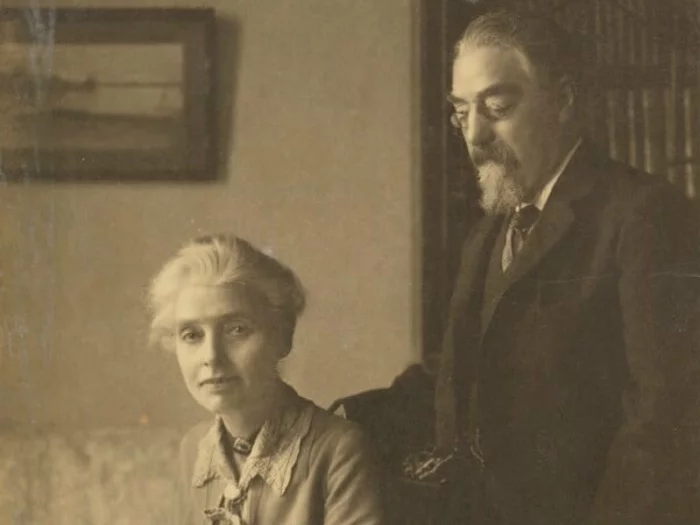
How did women become intellectuals in the 19th and 20th centuries? How and where did they work, and what strategies and sacrifices allowed them to negotiate space in a male-dominated world? Using the example of the newly emerging field of social research, the project focuses on several women from Great Britain and Central Europe who made significant contributions to their subject and can be deemed intellectuals, even if their contemporaries might have overlooked or denigrated their input. Understanding their unique positions, the project claims, requires not only a better grasp of how the intellectual-concept is gendered, but also a methodological reassessment of ‘intellectual labour’, changes in social research itself, as well as women’s self-positioning within the intellectual landscape.
Responsibilities at the GHIL
- Research Fellow in Modern History
- Reviews Editor for the GHIL Bulletin
- GHI Representative at the German History Society
Research Interests
- Modern British and European History
- Intellectual History and History of Knowledge
- Women’s History and Women’s Intellectual History
- History of Sociology and Social Research, Psychology and Psychoanalysis
- Histories of Exile, Flight and Migration
Education and Academic Background
| 2026– | Research Fellow at the GHIL |
| 2022–2025 | Teaching Fellow in Modern European History, Royal Holloway University of London |
| 2020–2022 | Postdoctoral Fellow, German Historical Institute London |
| 2016–2020 | PhD, Queen Mary University of London |
| 2014–2015 | MA Intellectual History and History of Political Thought, University College London / Queen Mary University of London |
| 2011–2014 | BA Hons English Literature and History, University of York |
Publications
Articles and Chapters
‘Hilda Weiss: Social Research Between Theoretical Analysis and Political Experience’, Kieler sozialwissenschaftliche Revue. Internationales Tönnies-Forum, 2 (2023), 108-118.
‘Time, Labour, Motherhood: Viola Klein’s Study of ‘Professional Womanpower’ as a Feminist Archive’, Women’s History Review, 33.1 (2024), 40-59.
‘Empirical Research as a Form of Participatory Knowledge? The Sociological Projects of the Frankfurt School as Democratic Strategy’, History of Intellectual Culture, 1.1 (2022), 97-122.
Reviews and Miscellaneous Publications
Terence Renaud, New Lefts: The Making of a Radical Tradition’, in Europe Now (2022) (Read here)
Hugo Drochon, Nietzsche’s Great Politics’, in H-Diplo (February 2021) (Read here)
‘Weimar to Cold War: New Books on Twentieth-Century German Intellectual History’, GHIL Bulletin, 41.1 (2019), 102-117 (Read here)