 India Research Programme
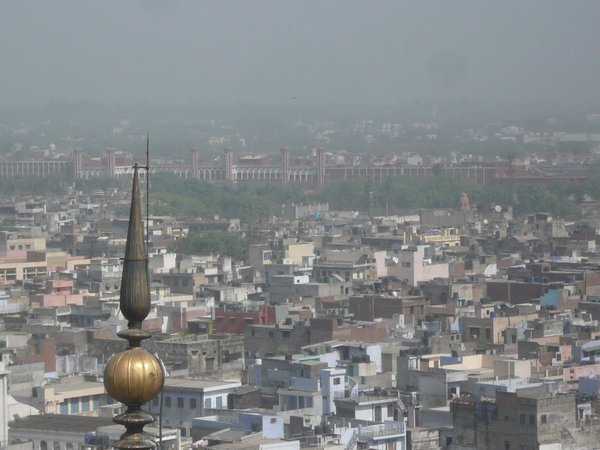
The GHIL has been actively engaged in research on the colonial and modern history of India since 2012. Its India Research Programme (IRP) came into existence in January 2018. The IRP works closely with project partners at well-known Indian universities and research centres to produce collaborative historical research on India. It has run long-term research projects on topics such as poverty and education and education and the urban in India since colonial times. Current projects include topics such as law, bureaucracy and monument making in colonial India, the production of popular histories in colonial and contemporary India, and digital archives and the politics of crowdsourcing history. The IRP plays an active part in shaping the research area Colonial and Global History at the GHIL.
History of the programme
The IRP was preceded by a five-year Transnational Research Group on 'Poverty Reduction and Policy for the Poor between the State and Private Actors: Education Policy in India since the 19th Century', which the GHIL ran in collaboration with distinguished scholars from Germany, India and the UK from 2013 to 2017.
People and Collaborations
At present the Programme includes GHIL Senior Fellow Indra Sengupta, who is also Head of Programme, and regular visiting fellows working on colonial India from the Joint Fellowship Programme with MWF New Delhi. Research projects in India run with the assistance of research associates and assistants, who at present are supported by a third-party grant from the BMFTR-funded Merian Centre in New Delhi, ICAS:MP.
The IRP works in close collaboration with ICAS:MP (Thematic Consolidation Group ‘Constructing Alternative Pasts: (New) Sources and Methods’) and the Max Weber Forum for South Asian Studies in New Delhi. Collaborations include creating digitised source repositories, organising research conferences and exchange of scholars.
Research
Research Project
Selling History: Tourist Guides, Bazaar Histories, and the Politics of the Past in India in the late 20th and early 21st Centuries
Indra Sengupta
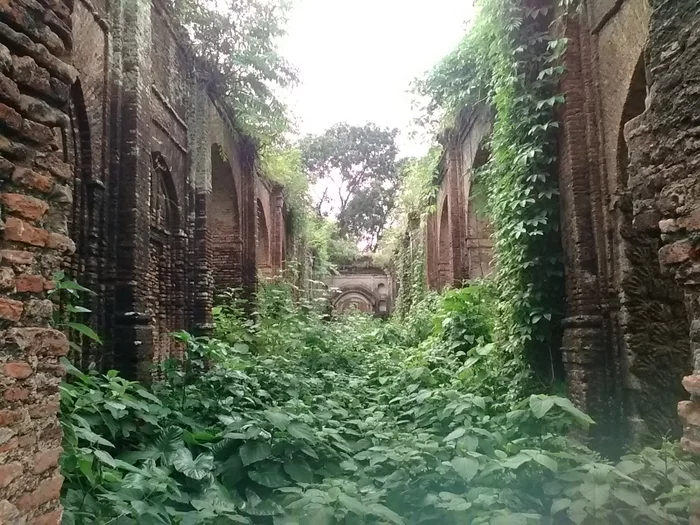
This project examines historical tourist guidebooks and locally produced historical tracts that circulate around historical/heritage sites in Murshidabad in eastern India. The aim is to understand the mutually constitutive relationship between popular regional ideas of the past and the changing political sphere in India since the late decades of the previous century.
Research Project
Collecting, Copying, Trading Ancient Indian Manuscripts in India, Britain and Germany in the Nineteenth Century
Indra Sengupta
This project speaks to some of the key questions surrounding colonial knowledge as a field of inquiry. It examines the practices surrounding collecting, copying and the trade in old Indian (primarily Sanskrit) manuscripts by European scholars and their Indian interlocutors in the nineteenth century. It looks at the material history of Indian manuscripts to understand the economic and social underpinnings of knowledge projects undertaken by European (in this case German and British) scholars of India working both within and without the colonial state.
Further projects
Research Project
Preserving India’s Past: Law, Bureaucracy, and Historical Conservation in Colonial India 1904–1925
Indra Sengupta
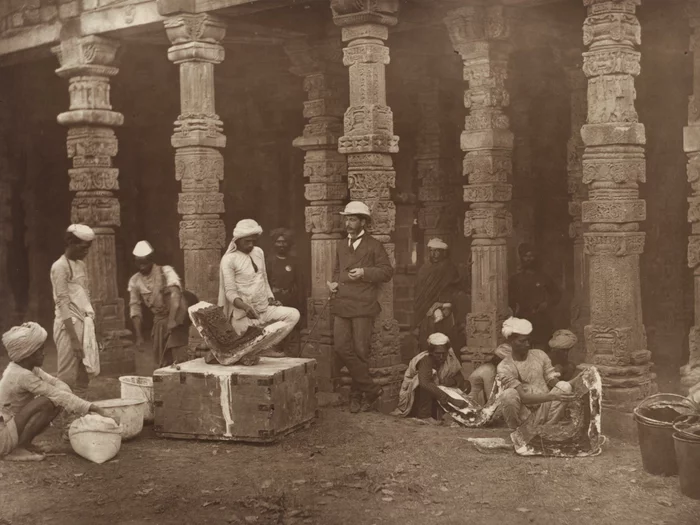
Taking the 1904 Ancient Monuments Preservation Act as a point of entry, this project examines the relationship between colonial law, its implementation by colonial bureaucracy, and the ‘making’ of historic monuments in India under British rule. The study focuses on Hindu religious structures. It looks beyond policy-making and analyses the many ways in which Indians exercised agency when faced with state power ‘on site’.
Collaborative Projects
Collaborative Projects
ICAS MP
Constructing Alternative Pasts: (New) Sources and Methods
M.S. Merian – R. Tagore International Centre of Advanced Studies: ‘Metamorphoses of the Political’
Read or download flyer (PDF)
Past and completed projects
Education and the Urban in India since the 19th Century
Bilderfahrzeuge – Aby Warburg’s Legacy and the Future of Iconology (2013-2023)
Schools, Colleges, and the Creation of a Suburb: An Education History of Nineteenth Century Uttarpara (Akash Bhattacharya, 2018–2019)
German-speaking Jewish refugees and India, 1930s–1950s (Joseph Cronin, 2017–19)
Transnational Research Group: Poverty and Education in India – a transnational collaborative project funded by the Max Weber Stiftung and directed by the GHIL (2013–2017)
Fellowships
Visiting Fellowships
India Research Programme Fellowships at the GHIL
At present the India Research Programme offers early career scholars from German and Indian universities short-term fellowships in the UK. The fellowship is run jointly with the Max Weber Forum New Delhi (for further details see below)
Former Visiting Fellows
2025
Aparna Vaidik, Professor of History, Ashoka University, India - IRP Visiting Fellow
2024
Professor Ravi Sundaram, CSDS New Delhi – ICAS:MP Visiting Fellow
Professor Neeladri Bhattacharya, Ashoka University, Sonepat - ICAS:MP TM1 Visiting Fellow
Professor Radhika Singha, JNU New Delhi – IRP Visiting Fellow
Professor Chitra Joshi, Indraprastha College, Delhi University (retired) - IRP Visiting Fellow
2023
Awadhendra Sharan, CSDS New Delhi - ICAS:MP Visiting Fellow
Ravi Vasudevan, CSDS New Delhi - ICAS:MP Visiting Fellow
2022
Professor Neeladri Bhattacharya, Ashoka University, Sonepat - IRP Visiting Fellow
Professor Janaki Nair, JNU, New Delhi (retired), - IRP Visiting Fellow
Professor Prabhu Mohapatra, University of Delhi – ICAS:MP Visiting Fellow
Joint Fellowships
GHIL/IRP-MWF Joint Fellowship
The Joint Fellowship is a collaborative programme that is run jointly by the GHIL/IRP and the Max Weber Forum for South Asian Studies, New Delhi.
The fellowship is open to early career scholars (postdocs/no later than 6 years from completion of PhD) from universities and other academic research institutions in Germany who wish to spend time in the UK and India, and whose research is situated in the broad field of the history of the British Empire and Colonialism.
The call for applications is usually out in July and the deadline for submission is the end of September each year. Please check our Scholarships page for the current call, which ends on 25 September.
Joint Fellows 2026
Dr Andreas Lipowsky (Delhi): Notes and Queries and Artefact Collection: The Questionnaire Method and the Making of Museum Anthropology
(mid-May to mid-July 2026)
Dr Soheb Niazi (Berlin): Between Empires and Wars: Dis:connections in the Entangled Networks of Hides, Skins and Meat Trade in Colonial India (1900-1945)
(June-July 2026)
Dr Niazi is one of the organizers of the conference Transformations and Contestations from the Global South: Rethinking Livestock Frontiers, which will take place at the GHIL on the 9th–10th July 2026.
Former Joint Fellows
2024
Dr Samira Junaid (Bengaluru) and Dr Jolita Zabarskaitė (Berlin): ‘Greater India’ from the perspective of South India and Malaya from the late colonial period to the early 1960s